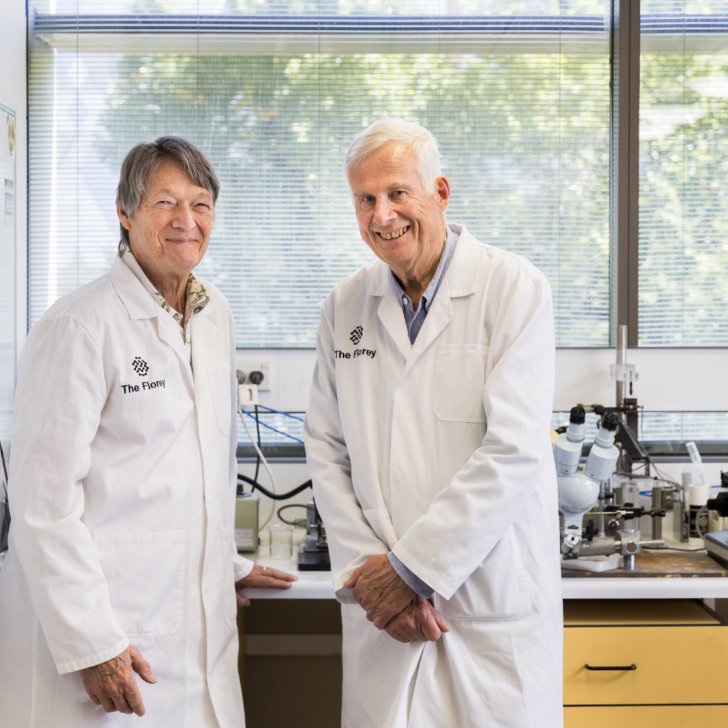
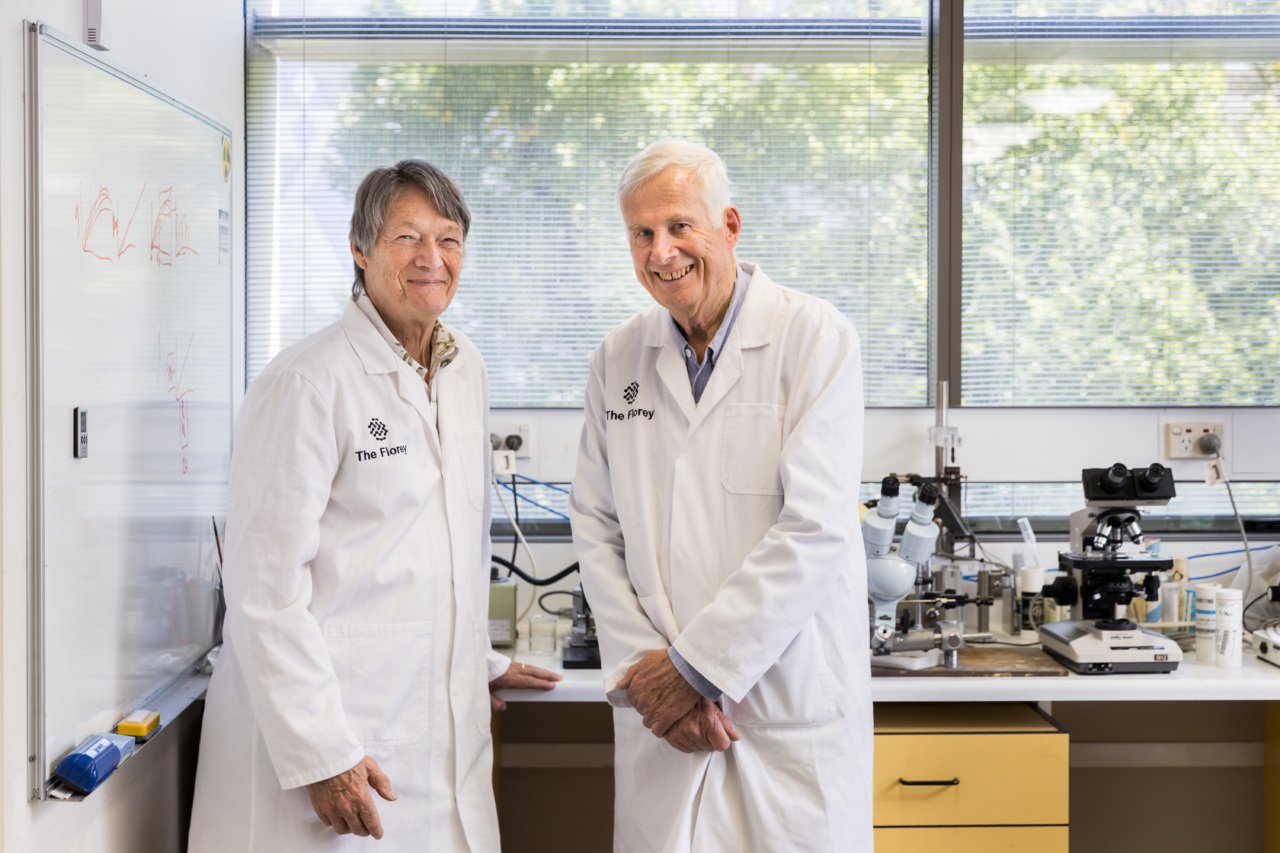
When Dr Michael McKinley first joined The Florey in 1969, much of what is known about the brain today had not yet been discovered.
“There were four or five neurotransmitters recognized — now there are dozens and dozens — and most of the hormones produced by the brain weren’t known,” he says.
Among the gaps in knowledge was how the brain, via the autonomic nervous system, regulates unconscious processes like temperature and breathing. It is an area of neuroscience Dr McKinley and his long-time collaborator Professor Robin McAllen have made remarkable progress in.
“We focus on the housekeeping bits of the brain because the thinking bits are too hard,” Professor McAllen laughs.
Dr McKinley and Professor McAllen have dedicated the past 15 years of their careers to understanding how the brain modulates inflammatory processes in the body and influences immune function.
“We’ve been studying how the brain talks to the immune system through sympathetic nerves, and we’ve identified a subset of nerves called splanchnic sympathetic nerves which keep inflammation under control,” says Dr McKinley.
Using animal models, the neuroscientists have discovered that splanchnic sympathetic nerves mediate a powerful anti-inflammatory pathway in the body in response to infection or injury.
“If we disable this pathway, the inflammatory response is much stronger,” says Professor McAllen.
“We suspect it’s there to prevent dangerous levels of systemic inflammation in response to low-grade insults and infections. But when there is a severe infection like sepsis, it doesn’t act in our best interests.”
In 2025, supported by a National Health and Medical Research Council Ideas Grant, the researchers began to trace the anti-inflammatory pathway from its origins in the brain all the way to the cells that drive defences against infection and injury.
They believe working this out is key to understanding how the body’s nervous and immune systems act together.
“This is really important in the context of sepsis,” says Dr McKinley. “But could also have implications for cancer research as we think these inflammatory processes may also get hijacked by some types of cancer.”
After decades at The Florey, Dr McKinley and Professor McAllen say it is “wonderful” to be spending their days in the lab, advancing knowledge of the brain.
“It’s why we do it,” says Professor McAllen. “And this research will keep us busy for a while yet.”
This article first appeared in The Florey’s 2025 Annual Report.