- Neurologist and Florey researcher, Dr David Vaughan, has been awarded a Brain Foundation grant for a project to uncover hidden brain lesions in epilepsy patients.
- The funding will allow Dr Vaughan and his team to test their super–resolution MRI technique on a larger group of patients following a promising small-scale trial.
- Finding and removing lesions in the brain could help treat or even cure epilepsy.
Researchers will use a new advanced MRI technique in combination with Australia’s most powerful MRI machine to detect ‘invisible’ brain lesions in epilepsy patients.
Led by neurologist and epilepsy imaging expert from The Florey Institute of Neuroscience and Mental Health, Dr David Vaughan, the team has developed a super–resolution MRI technique able to produce 3D images more than 20 times sharper than a standard hospital scan.
A grant from the Brain Foundation will allow them to further develop and refine their method.
“This project stems from an idea that I had more than 18 months ago and, while it is early days, we are excited to see it in use,” Dr Vaughan said.
“Rather than scanning the whole brain and producing average quality images, we focus our attention on the suspected brain region.
“Patients are required to spend longer being scanned, but what we end up with is about 30 overlapping images that we can computationally stitch together to create one sharp image.“
The team has already shown its technique works by testing it on a small group of patients with known lesions. They will use the funding to validate the technique in a larger group of patients and measure how often it can uncover an invisible lesion causing epilepsy.
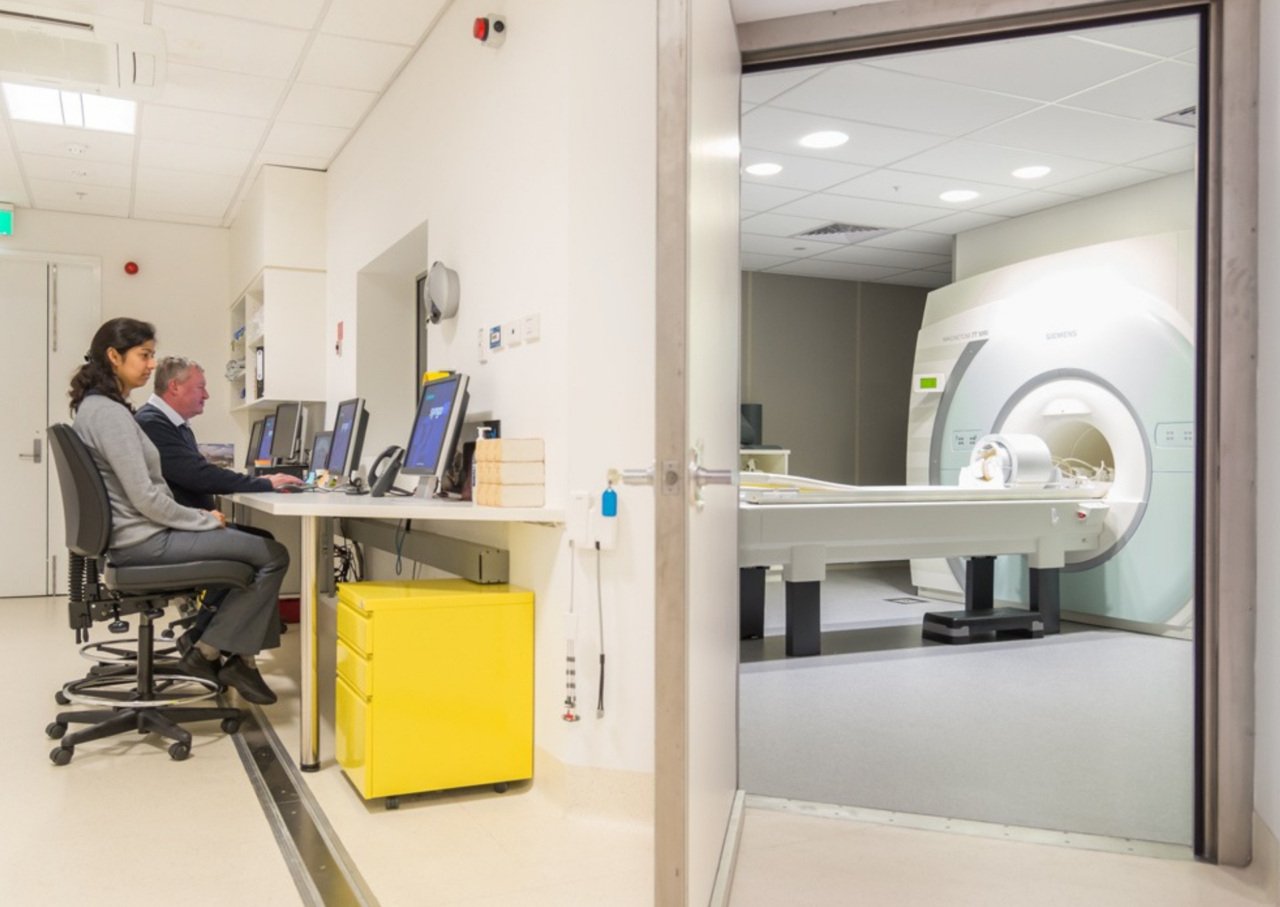
The technique was initially tested on a 3T MRI machine, typically used to detect brain lesions in epilepsy. The team is planning to adapt their technique for a 7T research MRI scanner, which is located at The Florey’s headquarters, to capture even finer detail.
“This is the most powerful human MRI scanner in Australia and there are only two in the country, one at The Florey in Parkville and the other in Brisbane,” Dr Vaughan said.
“By making small lesions clearly visible, our aim is to make targeted treatment possible and more effective, putting a cure within reach for more people with epilepsy.”