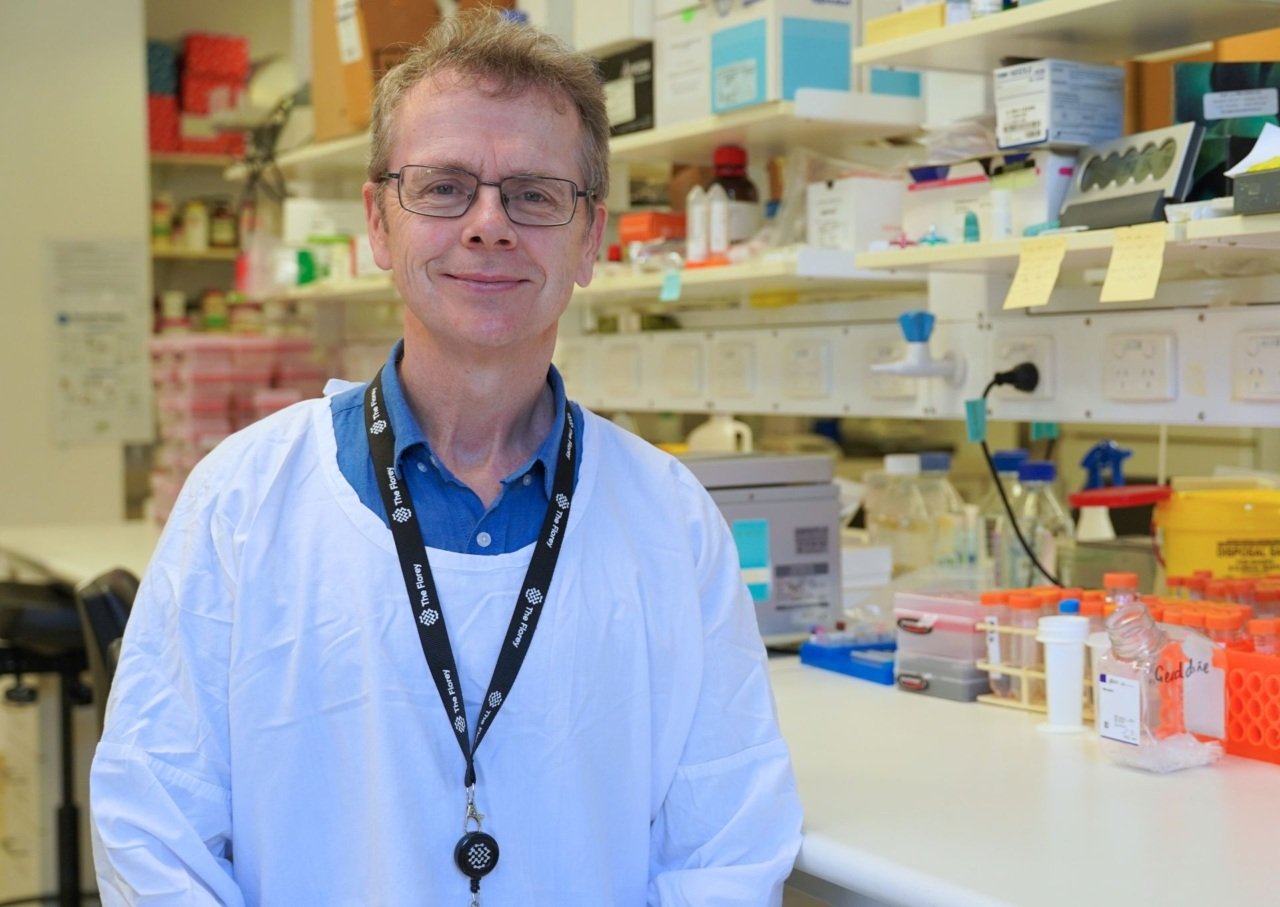
- Professor Anthony Hannan heads The Florey’s Epigenetics and Neural Plasticity Group and is a leading researcher in a field of study known as paternal immune activation (PIA).
- His team has used mouse models to show genes and life experiences, including exposure to infections such as COVID‑19, can alter sperm epigenetics and affect offspring brain development and behaviour.
- Professor Hannan says their findings reinforce the importance of maintaining good sperm health before conception.
How is a father’s sperm health linked to the brain health of his offspring?
Professor Hannan: There is evidence from our research group at The Florey, and others around the world, that paternal environmental exposures, life experiences and lifestyle factors can change sperm epigenetics (the way genes work). This has been shown most extensively in mouse models and these discoveries are increasingly being translated to humans.
The change in sperm epigenetics includes changes in RNA molecules that the sperm deliver to the oocyte (egg) at conception. RNA molecules are important because they can act as ‘master controllers’ of multiple genes. The transfer of these RNA molecules from sperm to egg can alter offspring development, including brain development, in ways that are highly relevant to various human disorders. Animal studies have shown links between altered sperm epigenetics and anxiety and depression in offspring.
When was this link first discovered?
Professor Hannan: Many of the major discoveries around sperm epigenetics have occurred in the past 15 years or so. Our own published discoveries on mouse models at The Florey have shown that a variety of paternal exposures and modelled lifestyle factors can change sperm epigenetics and alter offspring brain development, function and dysfunction. The paternal exposures researched to date by The Florey and others – and which have been linked to altered sperm epigenetics – include increased stress hormone levels, exercise, Western (high sugar and fat) diet during adolescence, infection (including the virus that causes COVID-19) and immune activation, as well as changes to the paternal gut microbiome.
Why has this area of research only emerged recently?
Professor Hannan: For many decades, the health of women before and during pregnancy, as well as through breastfeeding, has been heavily studied. It is clear that maternal exposures, experiences and lifestyle factors during these critical childbearing stages of life can affect offspring health. This research has included a field of study known as maternal immune activation (MIA). However, paternal offspring health had been almost entirely overlooked.
The work of our group at The Florey, and others around the world, then started to look at paternal epigenetic inheritance and its impacts on offspring health, particularly brain health.
In 2022, Dr Lizzie Kleeman, Dr Carol Gubert and I published a proposal of a new field, which we called paternal immune activation (PIA). In the following two years, we published research on two new mouse studies, that modelled paternal exposure to viral infection and later bacterial infection.
How has COVID-19 contributed to this area of research?
Professor Hannan: Following the pandemic, we created a new paternal COVID-19 mouse model and in 2025 published the first evidence that paternal infection with the SARS-CoV-2 virus altered the ‘payload’ (epigenetic instruments) of sperm RNA molecules in our mice and increased anxiety-like behaviours in the offspring. Considering that it is now estimated that billions of people may now have been infected with SARS-CoV-2 virus, the public health relevance of our discoveries is substantial.
What has your most recent research found?
Professor Hannan: In our latest study, we again used our mouse models to explore whether simply “switching on” a father’s immune system before conception could affect the brain health and behaviour of his future children.
Female offspring showed signs of stress-related behaviour, while male offspring displayed anxiety-like behaviour. These effects were seen even though the fathers were not infected with any real virus or bacteria – they just had their immune system stimulated.
What more can we learn from PIA research?
Professor Hannan: Our findings on SARS-CoV-2 viral infection open up new questions. We need to do more research to explore other major viruses, such as influenza and ‘common cold’ viruses. We can also look at other pathogens that may affect human sperm epigenetics and human health, particularly brain health, across generations.
Are there any human studies in this area of research?
Professor Hannan: The human studies in this field of paternal epigenetic inheritance have provided evidence that paternal exposures, experiences and lifestyle factors, such as stress, exercise and diet, can indeed alter sperm epigenetics. In some cases, they have been able to study children and adult offspring, but these studies require large amounts of long-term research funding, so this new field of human paternal epigenetic inheritance is only in its infancy. We are planning these kinds of studies ourselves at The Florey, together with external collaborators.
Finally, what should men planning conception do to protect the brain health of offspring?
Professor Hannan: We need a lot more research to be specific, but a simple message is that men who are trying to conceive should follow the same health advice as women who are trying to conceive.
The work from our group at The Florey, and many others around the world, suggests generally that men trying to conceive should follow a healthy lifestyle. This includes a healthy diet and physical activity, as well as reducing negative exposures, such as excessive intake of alcohol and other recreational drugs. Vaccination might be expected to also have beneficial effects on sperm epigenetics (by protecting from infection and illness), but this has not yet been studied in humans.
Embracing a healthy lifestyle has no side effects, but many benefits – it’s good for the male, most likely beneficial for sperm epigenetics, and could even enhance the health prospects of his offspring.