- Dementia describes a group of symptoms that occur when the brain is damaged by disease, affecting a person’s memory, thinking and behaviour.
- Alzheimer’s disease, the most common cause of dementia, is marked by distinctive biological changes in the brain, including the build-up of plaques and tangles.
- The early stages of Alzheimer’s can last 10 to 20 years, often with no noticeable symptoms. Once memory problems appear, it typically takes four to eight years for the disease to progress.
One of the most common questions I’m asked as a dementia researcher is: What is the difference between dementia and Alzheimer’s disease? It’s an excellent question.
Dementia is not a specific disease. Instead, it is a general term used to describe a group of symptoms that occur when the brain is damaged by disease. These symptoms can include memory loss, difficulty with thinking and reasoning, poor judgement and concentration, and changes in language or communication.
There are many different diseases that can cause dementia and Alzheimer’s disease is one of them. In fact, Alzheimer’s disease is the most common cause of dementia, accounting for about 70 per cent of cases.
Other less common causes include frontotemporal lobar degeneration, vascular dementia and Lewy body dementia.
How Alzheimer’s starts and progresses
Alzheimer’s disease is marked by distinctive biological changes in the brain. Specifically, two proteins called amyloid-beta and tau slowly build up over time.
During the disease process, these proteins become sticky and begin to clump together. As they accumulate, they damage brain cells (neurons) and eventually cause them to die. After many years, these clumps form larger structures known as plaques and tangles.
Unlike some other brain diseases, Alzheimer’s follows a relatively predictable and progressive pattern. It usually begins in a region of the brain called the entorhinal cortex.
During this early stage, which can last 10 to 20 years, there are often no noticeable symptoms. The disease then spreads to the hippocampus, an area essential for forming new memories.
When significant damage occurs here, short-term memory loss, a hallmark symptom of Alzheimer’s, begins to appear.
In later stages, the disease spreads to the neocortex, affecting language, reasoning and social behaviour. From the time memory problems first become noticeable it typically takes four to eight years for the disease to progress to advanced stages.
By the late stages, the brain can weigh significantly less than a healthy brain, sometimes losing 20 to 30 per cent of its total mass due to widespread loss of neurons.
Most cases of Alzheimer’s disease are described as “sporadic”, meaning there is no single direct cause. These cases usually develop after the age of 65 and are referred to as late-onset Alzheimer’s disease.
Ageing is the greatest risk factor, along with a combination of genetic and environmental influences. In rare cases (about 1-2 per cent), Alzheimer’s is caused by an inherited genetic mutation and typically develops earlier, often before the age of 60.
How dementia is diagnosed
Diagnosing dementia and identifying the underlying disease causing it involves a comprehensive process, usually undertaken by a specialist.
This includes a clinical evaluation, memory and cognitive testing, and brain imaging (such as MRI, CT, or PET scans). Even with these technologies, three in 10 Alzheimer’s cases are not accurately diagnosed compared to other dementias.
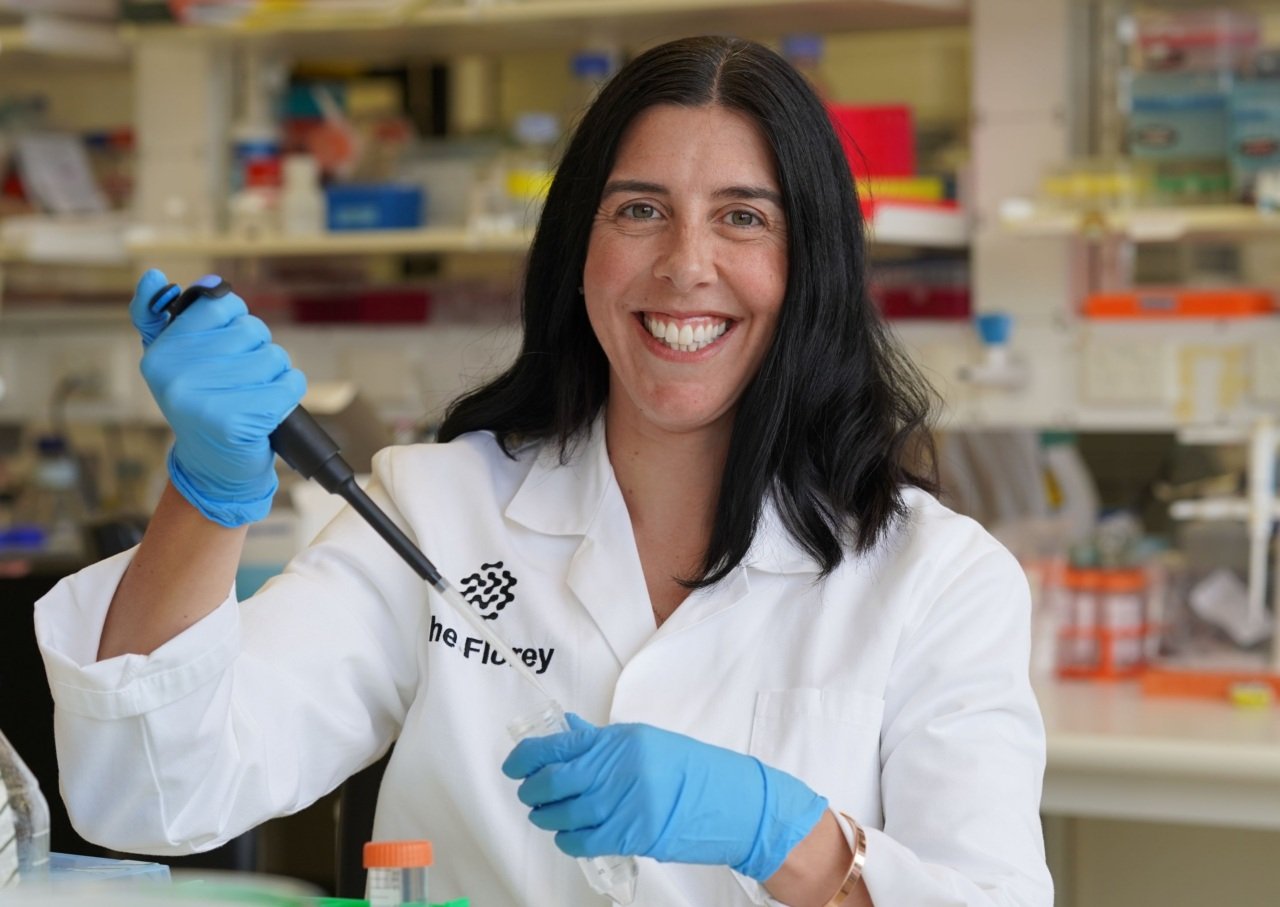
In recent years, specialised blood tests have transformed the diagnosis of Alzheimer’s disease.
These tests measure amyloid-beta and tau levels in the blood and can reduce the need for more expensive or invasive brain imaging procedures and have improved diagnostic accuracy to more than 90 per cent.
What The Florey is doing
The Australian Imaging Biomarkers and Lifestyle (AIBL) study based at The Florey has played a key role in developing these new blood diagnostics.
Currently, the blood tests are being tested in several memory services, as part of a flagship ‘real world’ study led by The Florey and known as the Enhanced Dementia Diagnosis study.
The National Dementia Diagnostics Facility is also based at The Florey and is the national laboratory for dementia-related diagnostic testing.
This service initially focused on more invasive testing using the fluid that surrounds the brain, but with new blood tests demonstrating great promise, we expect that this service will offer blood tests in the near future.